
Tetebatu Waterfall (Durian Indah): A Local’s Guide

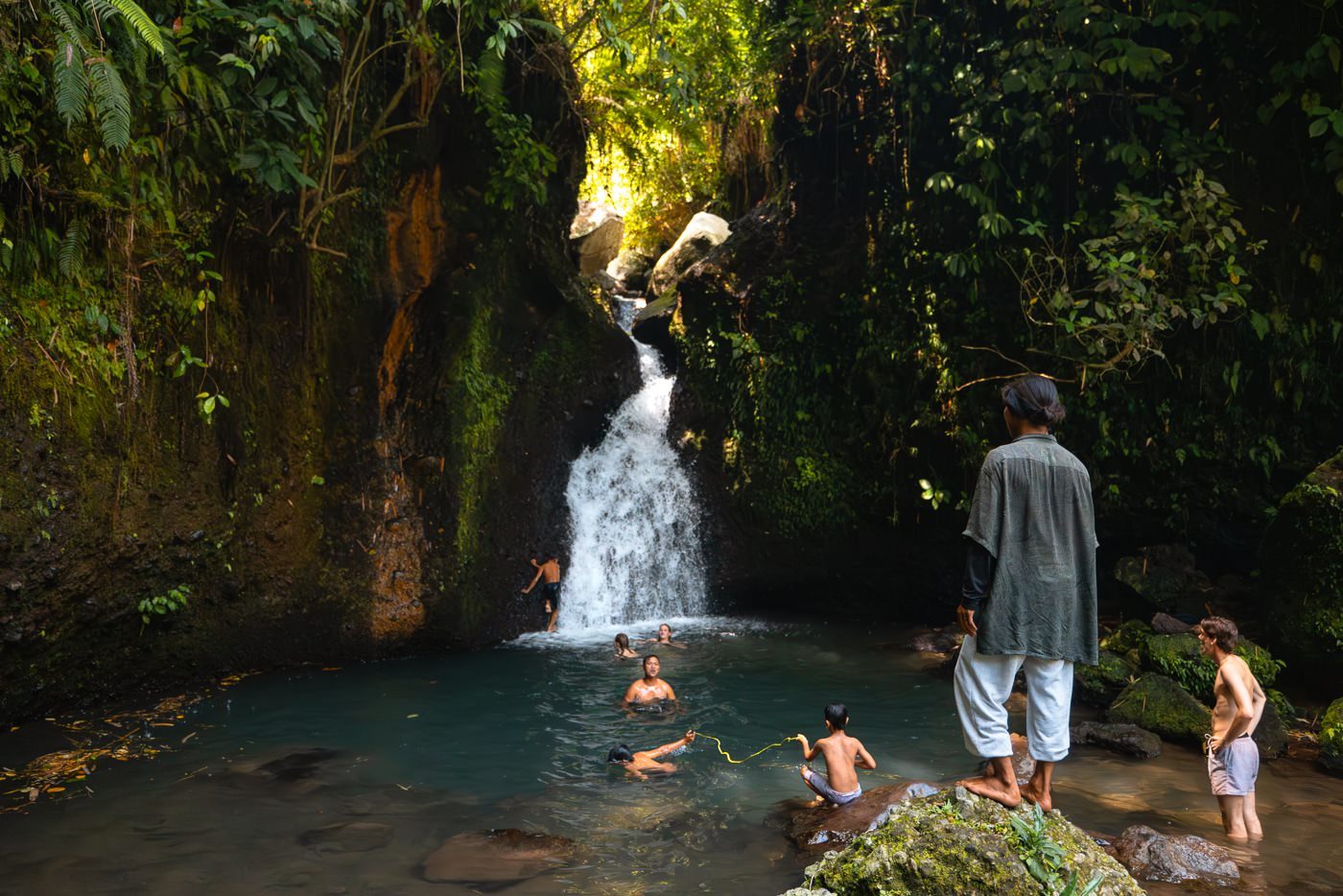
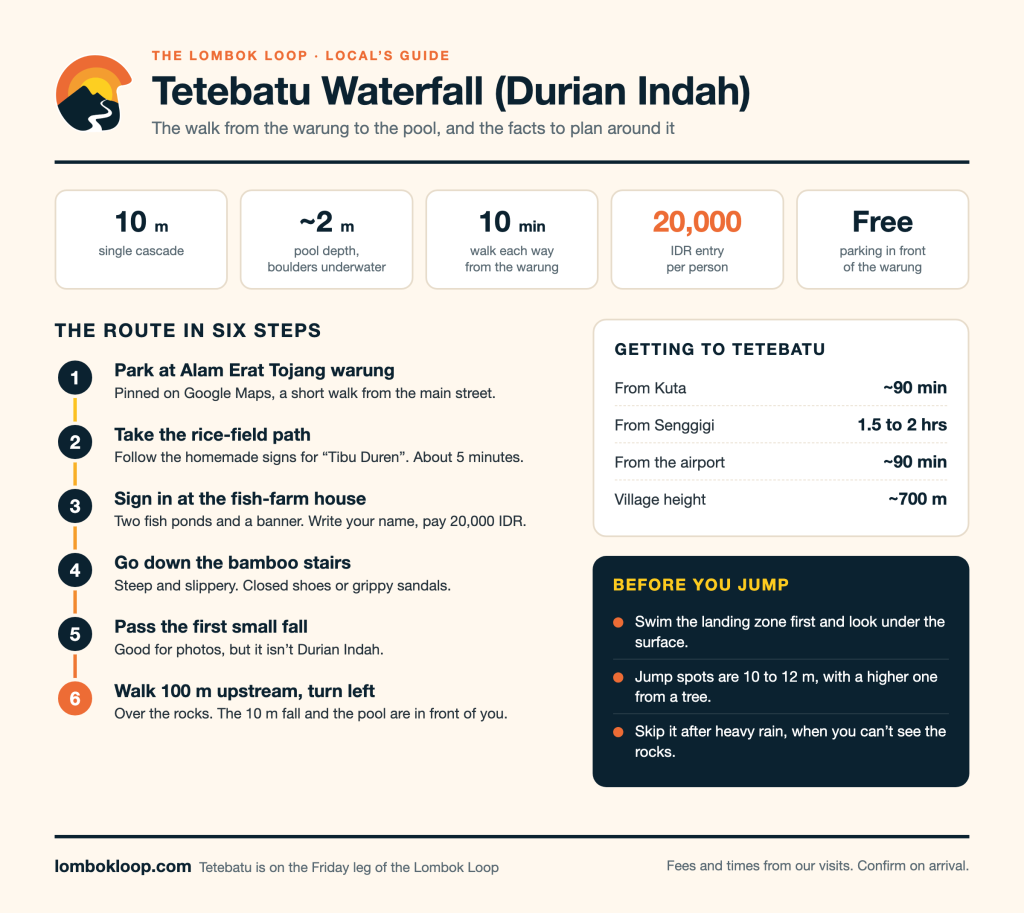
The Tetebatu waterfall most people mean is Durian Indah, a 10-metre cascade into a pool deep enough to swim and jump in, about ten minutes on foot from the rice fields. The signs call it Tibu Duren, Google Maps calls it Durian Indah, and several other waterfalls nearby get mixed up with it, so it’s easy to end up at the wrong one.
We stop here every Friday on the Lombok Loop, so we know this path well. The group swims, a few riders jump (it’s optional), and then we eat lunch in the village. This guide covers what we tell people before they get off the scooter, plus the bits most Tetebatu guides skip: which waterfall is which, what each one costs, and how to jump without hurting yourself.
If you’d rather skip the logistics, Tetebatu is on the Friday leg of the Loop and the route planning’s done. If you’re riding yourself, everything below works without a guide.
Tetebatu Waterfall at a Glance
Durian Indah is the one we stop at, because the walk is short and the pool is deep enough for swimming and jumping. It isn’t the tallest or most dramatic waterfall on Lombok, and we’d rather say so up front: Tiu Kelep and Benang Stokel are bigger. You get a clear pool in a small jungle gorge, a jump rock and a cool swim after a long ride.
- Height and pool: About 10 m in a single drop, into a pool roughly 2 m deep with boulders around it and under the surface
- Walk: About 10 minutes each way from the warung, ending with a steep bamboo staircase
- Entrance fee: 20,000 IDR per person, paid at a house on the path
- Parking: Free in front of Alam Erat Tojang warung
- Distance: About 90 minutes from Kuta, 1.5 to 2 hours from Senggigi and 43.5 km from Lombok International Airport
- Best for: Swimmers and confident jumpers. Closed shoes help on the stairs
Local Tip: Maps, signs and guides all spell the name differently. Search for Alam Erat Tojang warung on Google Maps, park in front of it and start walking from there.
Which Tetebatu Waterfall Is Which?
Tetebatu has several waterfalls and every guide names them differently. We know Durian Indah and Benang Stokel first-hand. Where a detail below comes from another guide or from our older waterfall roundup instead of a recent walk, we say so.
| Waterfall | Walk | Fee | Our take |
| Durian Indah (Tibu Duren, Tetebatu waterfall) | About 10 min each way | 20,000 IDR | The one we stop at. Swim and jump |
| Jeruk Manis (Sweet Orange waterfall) | 30 to 40 min through forest, river crossings (older roundup) | 10,000 IDR incl. parking (older roundup, check on arrival) | Half a day and a guide |
| Tibu Bunter (the Tetebatu one) | About 20 min uphill from Sarang Walet (another guide) | 25,000 IDR (another guide) | Dry in the dry season. We’d pick Durian Indah |
| Benang Stokel and Benang Kelambu | About 15 min to Stokel, then 15 min to Kelambu | 35,000 IDR each when we got in without a guide. Travellers now report 125,000 IDR | Bigger falls, about 45 min from Tetebatu |
Durian Indah (Also Signposted Tibu Duren)
Durian is the Indonesian word for the fruit, and the name gets spelt a few ways: we’ve seen Tibu Duran and Tibu Duren on boards and in guides. Google Maps lists it as Durian Indah waterfall. It’s the main Tetebatu waterfall in practice, and the one we visit on the Lombok Loop.
Jeruk Manis
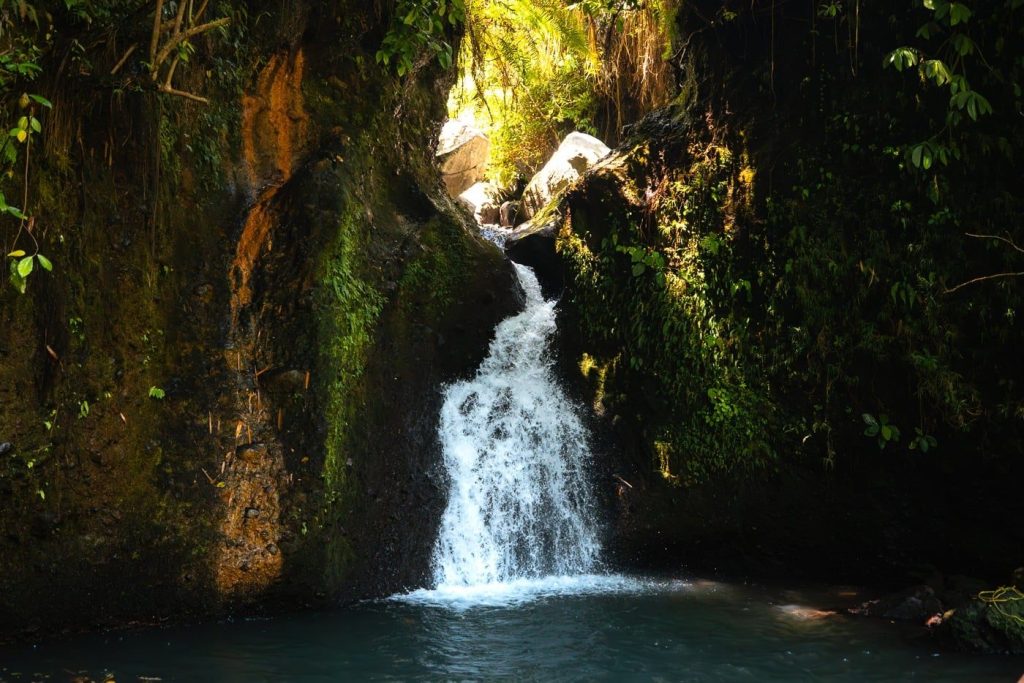
Jeruk manis means sweet orange. This is the bigger, wilder walk. Our older waterfalls roundup lists 30 to 40 minutes through forest with river crossings, ending at a tall fall over a moss-covered cliff with a deep pool. You can also reach it from the Durian Indah side by turning right at the first small waterfall and following the stream upstream past several more cascades, though we haven’t timed that route.
We’d pick Durian Indah if you’ve got an hour and a swimsuit, and Jeruk Manis if you’ve got half a day and want the trek. Go with a local guide in the wet months, because reviewers report guides holding groups at high-water crossings after rain.

Tibu Bunter (the Tetebatu One)
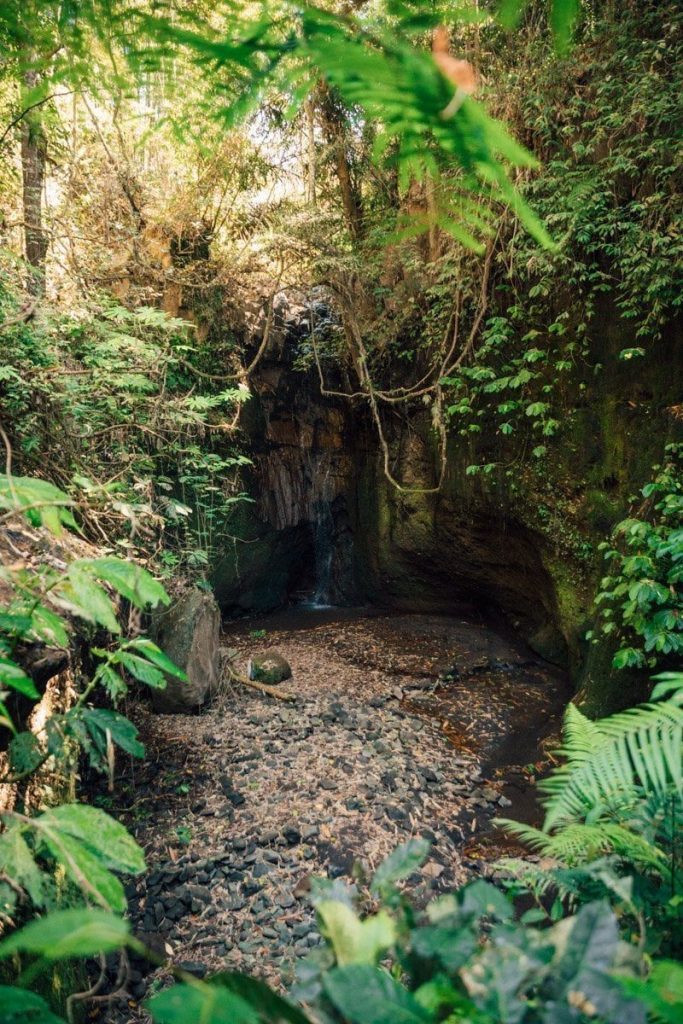
Two waterfalls go by this name. The Tetebatu one is a steep 20-minute walk uphill from Sarang Walet, a cave-swim spot that another guide calls touristy, with a warning that belongings have been stolen there. It was completely dry the first time we went in the dry season. We came back in the wet season and it’s a nice waterfall, but it doesn’t make our list, and we’d send you to Durian Indah instead.
The other Tibu Bunter is near Sesaot, about an hour’s ride from Senggigi, next to Batu Santek. Both are free to visit, keep a decent flow all year, and have shallow pools you can’t really swim in. That’s a different part of Lombok, so check which Tibu Bunter a guide means before you ride anywhere.
Benang Stokel and Benang Kelambu
Benang Stokel and Benang Kelambu are the big, famous falls. They’re in Teratak village in Central Lombok, about 45 minutes from Tetebatu and 1.5 hours from Senggigi. Stokel is an easy 15-minute walk to three spouts falling into a shallow pool, so it’s a natural shower more than a swim. Kelambu is another 15 minutes on: a wide green wall of cascades into a man-made concrete pool you can swim in. Kelambu means net, and you’ll see why.
The staff at the ticket office were pushy about a guide being compulsory, and it isn’t. We got in for 35,000 IDR each without one after some negotiating, and travellers now tell us the fee has gone up to 125,000 IDR per person, so settle the price before you pay. We’d go on a weekday, because weekends are busy.


How to Get to Tetebatu Waterfall
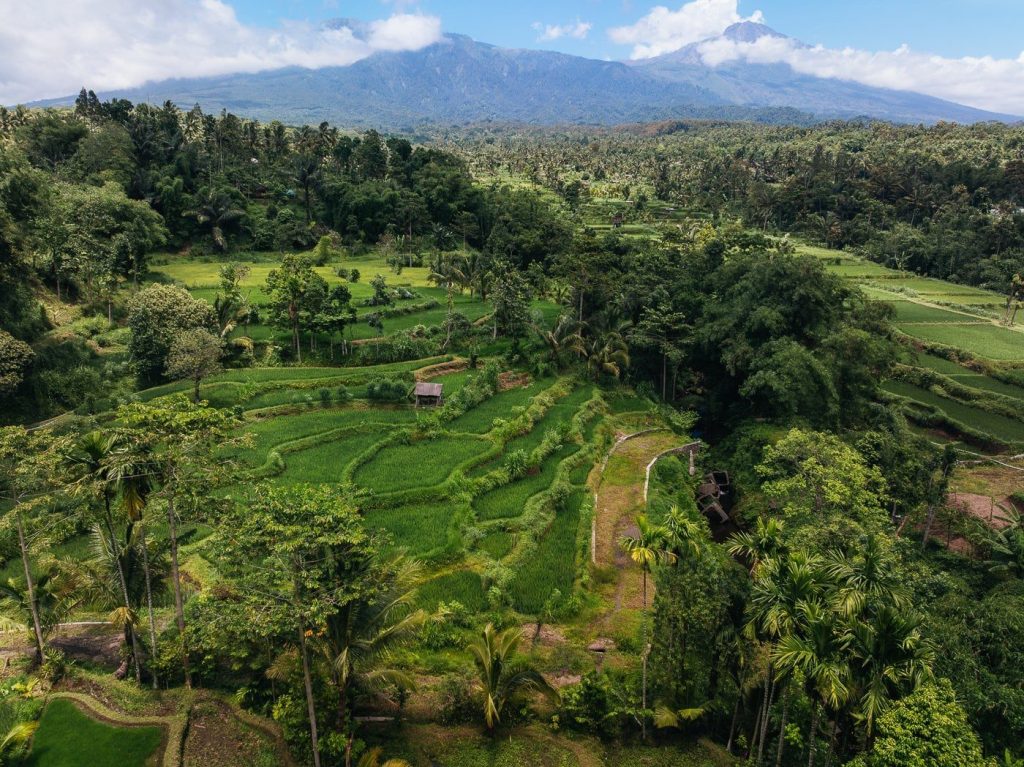
Tetebatu sits about 700 m up on the southern slopes of Mount Rinjani, so it’s cooler than the coast. From Kuta it’s about 90 minutes by scooter or car, from Senggigi it’s 1.5 to 2 hours depending on traffic, and from the airport it’s 43.5 km, roughly 90 minutes. The roads are good until you reach the village, where they narrow, so take the corners slowly if you’re on a scooter.
The walk starts at Alam Erat Tojang warung, which is pinned on Google Maps. It’s within walking distance of the main street. Park in front of it (it’s free) and walk from there.
The Walk, Step by Step
The path is short and has makeshift signs, so a guide isn’t required for this one. Here’s what you’ll meet, in order.
- Park in front of Alam Erat Tojang warung. It’s a short walk from the main street.
- Take the path straight out into the rice fields. Look for the homemade signs saying Tibu Duren. It’s about 5 minutes.
- Stop at the small house with two fish farms. Banners show the way down. Sign your name and pay the 20,000 IDR entry here.
- Follow the path down through the yard. The drop is steep, with bamboo rails and a bamboo staircase, and it’s slippery.
- Pass the first small waterfall at the river. It’s good for photos, but it isn’t the main one.
- Walk about 100 m upstream over the rocks and turn left. Durian Indah and its pool are in front of you.
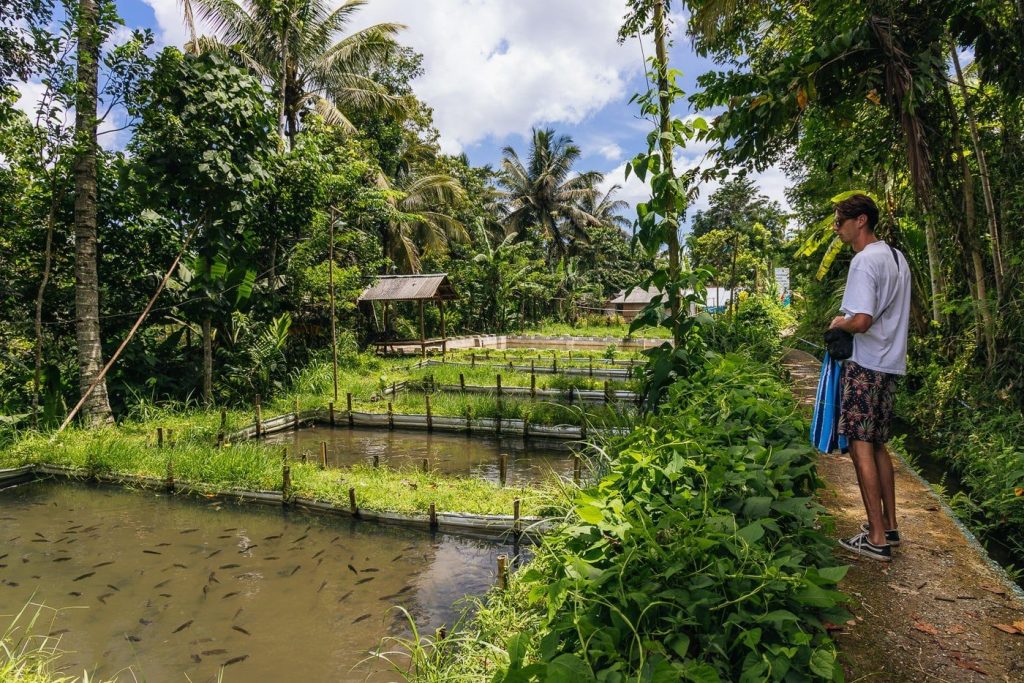
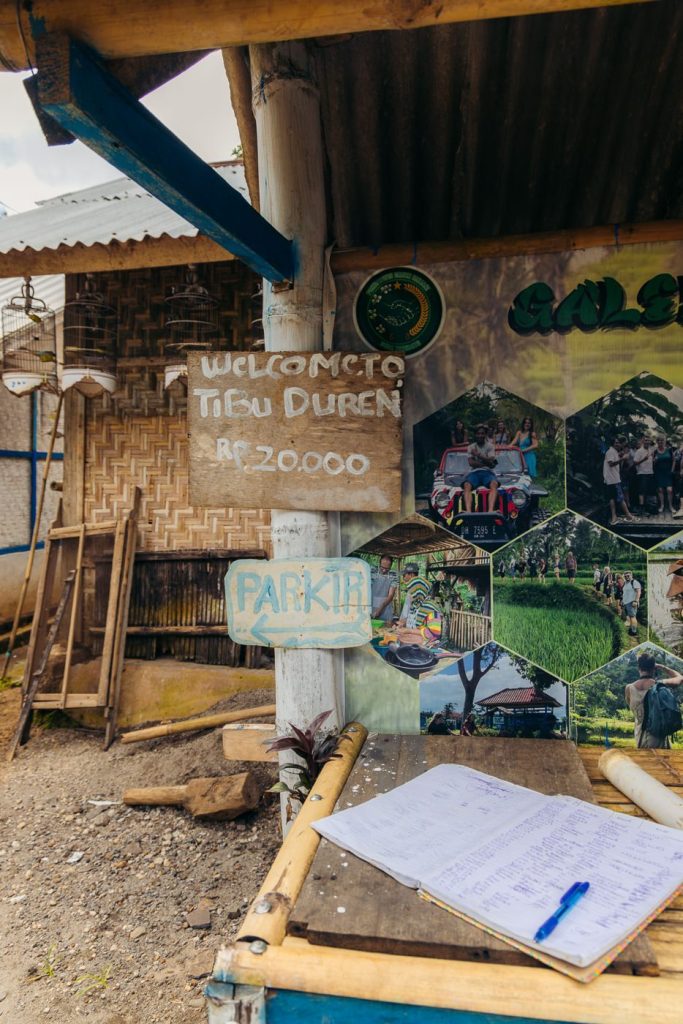
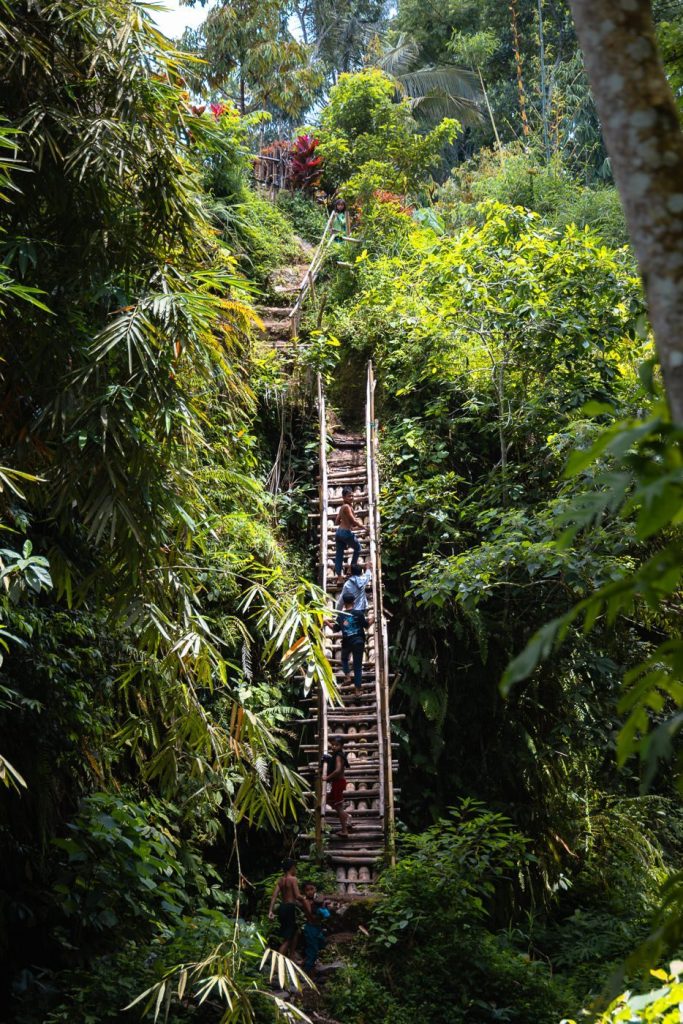
The board at the sign-in house reads Welcome to Tibu Duren and carries the entry fee, so you know you’re in the right place. The stairs are the only tricky part. Flip-flops are a bad idea here, and we’d wear closed shoes or grippy sandals.
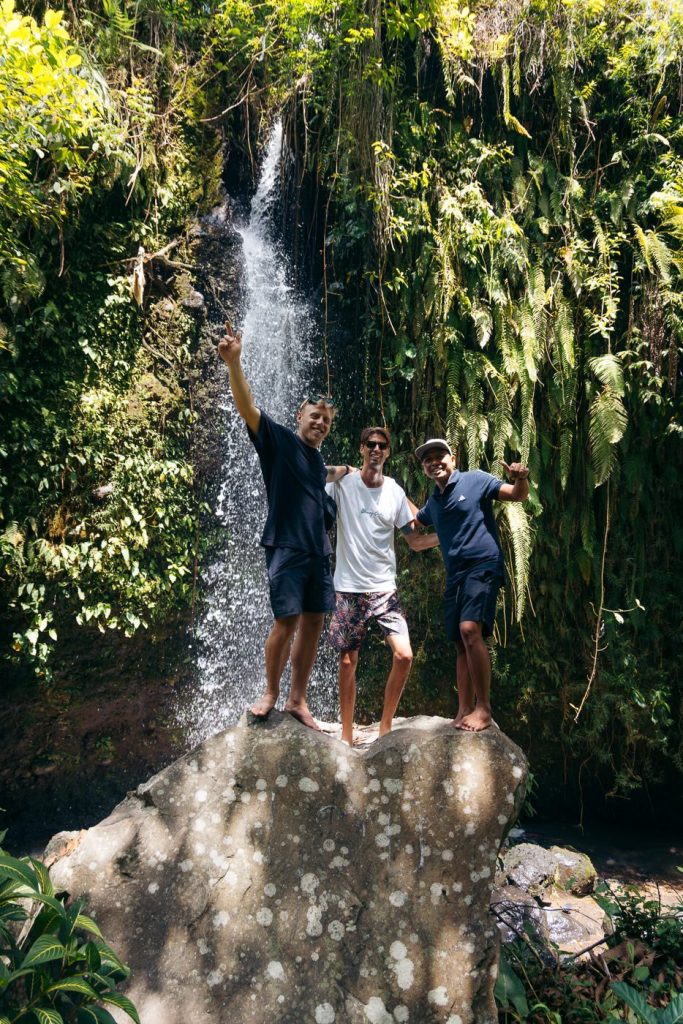
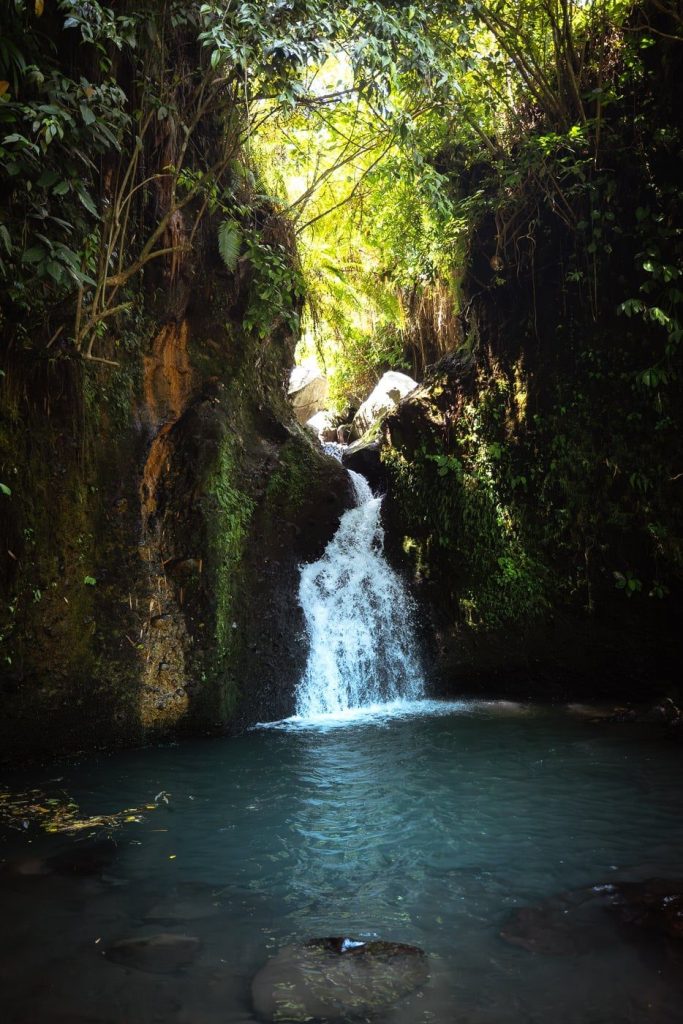
If you turn right at the first small waterfall instead of left, the stream continues past several more cascades towards Jeruk Manis. We turn left, because Durian Indah is the one with the pool.
What It Costs
| Item | Cost | Notes |
| Entry | 20,000 IDR per person | Paid at the sign-in house, where you write your name in the book. The price is on the board |
| Parking | Free | In front of Alam Erat Tojang warung |
| Guide, waterfall only | Not needed | The path is short and signed |
| Guide, waterfall, rice fields and monkey forest | 150,000 to 250,000 IDR per person | Includes the 30,000 IDR monkey forest entry. These were the prices on our February 2026 visit to the forest |
Bring cash in small notes. Prices drift, so treat these as a guide and check the board at the sign-in house.
Swimming and Cliff Jumping at Durian Indah
The pool is clear and about 2 m deep, with big boulders around the edge and some under the surface. It was busy when we went, so don’t count on having it to yourself.
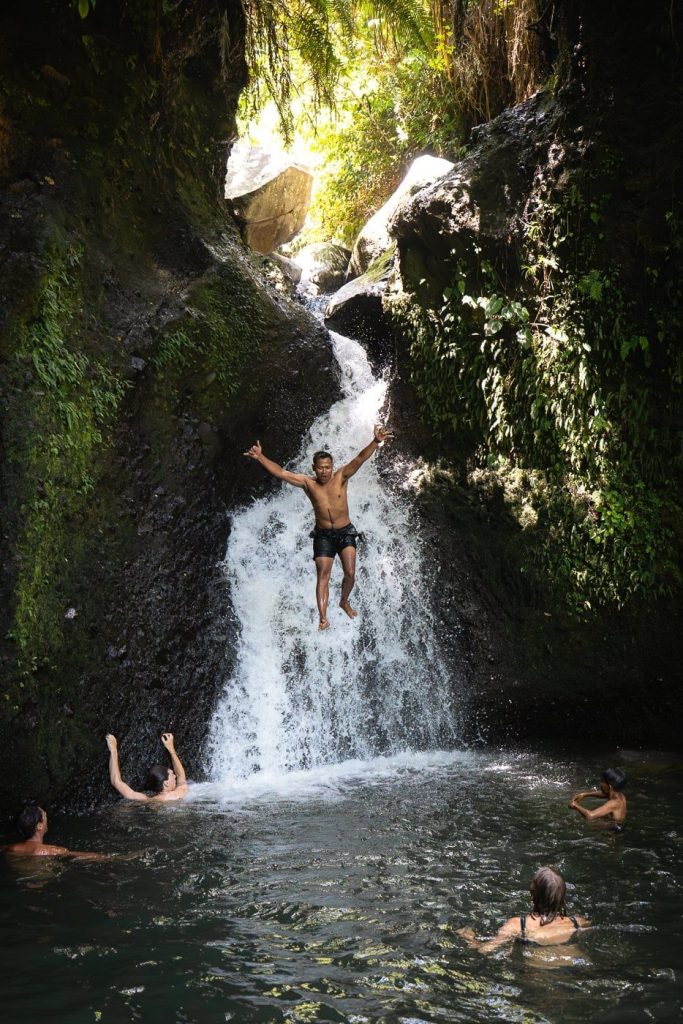
Local kids offer to show you the jump almost as soon as you arrive. The way up is the waterfall itself, which is slippery, then along the left side to a spot roughly 10 to 12 m above the pool. There’s also a higher jump from a tree on the right of the cascade, reached by a route we’d call sketchy.
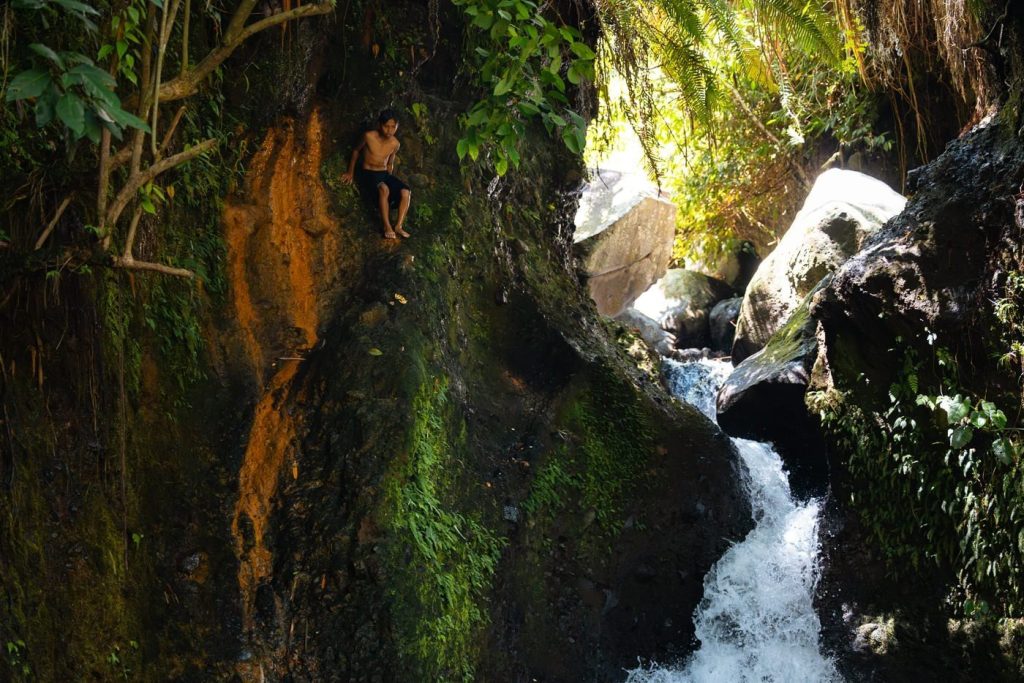
One of us touched the bottom on a jump here, so depth isn’t a formality. The pool is small, and waterfalls change with every wet season.
Before any jump we’d swim over the landing zone, dive down and look, and ask the kids where the rocks are. We’d skip the tree jump unless you’ve done a lot of this, and we’d skip all of it after heavy rain, when the water’s too cloudy to see the boulders. On the Lombok Loop the jump is optional.
When to Go: Season, Weather and Time of Day
The dry season, April to October, is the easy time for walking around Tetebatu. We went in February, in the wet season, and the rice fields were bursting with colour and the waterfall was flowing well. The shoulder months are wetter, and that’s when the falls look their best. Our month-by-month guide has the rest of the island.
After heavy rain the stream rises and the paths turn slick. Reviewers report guides holding groups at a high-water crossing on the longer walk to the upper falls, and we’d treat a brown, fast river as a no for jumping.
Go early if you can. It was busy when we visited, and the day tours run a rice fields, waterfall and monkey forest circuit. The monkeys are most active before 11am anyway. Tetebatu is cooler than the coast, so pack a layer if you’re staying the night.
Waterfall, Lunch and Monkey Forest in One Day
On the Lombok Loop we swim at the waterfall first, eat a buffet lunch, then walk into the forest to look for the black monkeys. If you’re on your own, we’d flip it. The ebony leaf monkeys are most active between 8 and 11am, so do the Tetebatu Monkey Forest first with a guide, then ride about 20 minutes to the waterfall for a swim.
Our rough day from Kuta is to leave around 6.30am to reach the forest gate for 8am, spend a couple of hours in the forest, swim from late morning, eat in the village, and be back on the road in the early afternoon so the mountain section is behind you before dark.
Lunch fills up. Oktavia Warung in the village was fully booked when we arrived at 11am, so we’d aim earlier. Alam Erat Tojang, where you parked for the waterfall, is the easy option straight after the swim. If you’re building a longer trip, our 7-day Lombok itinerary puts Tetebatu on day three.
Where to Stay in Tetebatu
Most people do this as a day trip from Kuta or Senggigi, but sleeping up here gives you cool nights and the forest at 8am without the ride. Accommodation is mostly family-run homestays and small bungalows beside the rice fields. Our guide to where to stay in Tetebatu covers the ones we’d pick at each budget.
Tetebatu Waterfall FAQs
Is Tetebatu waterfall worth visiting?
Yes, if you want a swim and a jump after a short rice-field walk. Durian Indah is about 10 m high, so it’s smaller than Tiu Kelep or Benang Stokel, but the pool is clear and deep and the walk is only ten minutes each way.
How much is the Tetebatu waterfall entrance fee?
20,000 IDR per person, paid at a house on the path where you also sign your name. Parking in front of Alam Erat Tojang warung is free. Prices can change, so carry small notes.
Do you need a guide for Tetebatu waterfall?
Not for Durian Indah. The path is short and has makeshift signs. A guide earns the fee at the monkey forest, and guided walks run 150,000 to 250,000 IDR per person if you add the waterfall and rice fields.
What’s the difference between Durian Indah, Tibu Duren and Jeruk Manis?
Durian Indah and Tibu Duren are the same waterfall: Durian Indah is the name on Google Maps and Tibu Duren is what the local signs say. Jeruk Manis is a different, taller waterfall that needs a longer forest walk, about 30 to 40 minutes with river crossings.
How long is the walk to Tetebatu waterfall?
About ten minutes each way from Alam Erat Tojang warung, ending in a steep bamboo staircase. Allow an hour or more in total if you plan to swim.
Can you cliff jump at Tetebatu waterfall?
Yes. Local kids show you a spot about 10 to 12 m up on the left of the waterfall and a higher one from a tree on the right. The pool is about 2 m deep with boulders under the surface, so check the depth first.
Is there more than one Tibu Bunter waterfall?
Yes. One is near Tetebatu and goes dry in the dry season. The other is near Sesaot, about an hour’s ride from Senggigi, next to Batu Santek, and flows all year.
How far is Tetebatu waterfall from Kuta?
About 90 minutes by scooter or car from Kuta, 1.5 to 2 hours from Senggigi, and 43.5 km from Lombok International Airport.
When is the best time to visit Tetebatu waterfall?
April to October is the dry season and the easiest for walking. We’ve also been in February, when the waterfall was flowing well. Go early in the day, and skip jumping after heavy rain.
Seeing Tetebatu on the Lombok Loop
If you’d rather not work out the walk, the parking and the timing yourself, Tetebatu is on the Friday leg of the Lombok Loop. We swim and jump at the waterfall (optional), eat a traditional buffet lunch, then look for the black monkeys before riding on around Rinjani to Sembalun. You can join from Senggigi every Thursday or from Kuta every Friday. Our roundup of waterfalls in Lombok covers the rest of the island’s falls if you’re staying longer.

