

Tetebatu Monkey Forest: How to See Lombok’s Black Monkeys

Most travellers in Indonesia get their monkey fix in Bali, but if you’ve spent any time at the Ubud Monkey Forest, you know it can feel more like a circus than a wildlife encounter. Lombok does it differently. Our black monkeys are ebony leaf monkeys, also known as the East Javan langur or Javan lutung, and they’re the island’s most fascinating residents. Seeing them takes some effort, a bit of patience and two feet on the ground at the base of Mount Rinjani in the Tetebatu Monkey Forest.
These days the monkey forest is a stop on the 4-day Lombok Loop. On the Tetebatu day we swim at the Tetebatu waterfall, have a buffet lunch, then head into the forest to look for them. It made the cut after our team’s first trek in here. If you’re riding up on your own, this is everything we’d tell a mate before they go.
Tetebatu Monkey Forest Overview
- Location/Base: Most monkey tours start from Tetebatu Village, which is about 90 minutes from Kuta and 1.5 to 2 hours from Senggigi, depending on traffic.
- Best Time to Visit: Arrive between 8:00 AM and 11:00 AM. This is when the monkeys are most active and feeding before the heat arrives.
- The Guide: Technically, you can enter the forest alone, but we highly recommend a guide. These monkeys don’t hang out by the entrance, so a guide makes all the difference for spotting them and finding your way on the unmarked trails. You’re also putting money straight into the village.
- Total Cost: 150,000-250,000 IDR per person with a guide (this includes the 30,000 IDR Tetebatu Monkey Forest entry, plus the waterfall and rice field walk).
- Chances of a Sighting: Good with a guide in the morning, never guaranteed. They’re wild and nobody feeds them. On our trek, word came through about 10 minutes in that another group had found the troop.


Getting to Tetebatu Monkey Forest
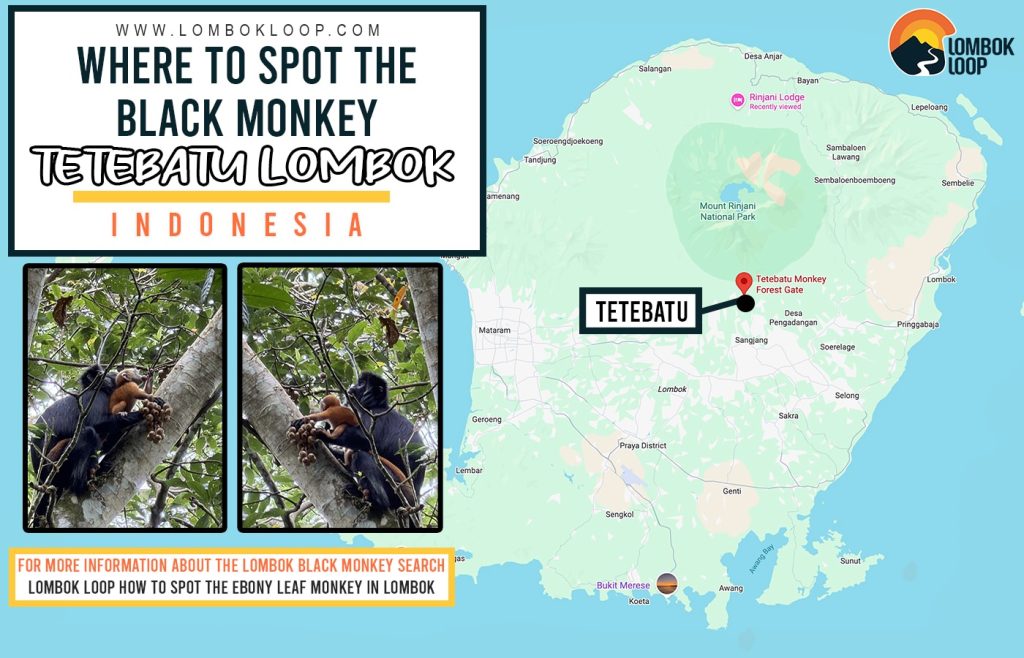
The ride from Kuta took us around 1 to 1.5 hours by motorbike or car (traffic dependent), and it’s a pretty one, with most of the road running past rice fields towards Mount Rinjani. The roads are good until you reach the Tetebatu area, where they narrow, so take the corners slowly if you’re riding a scooter.
Arriving in Tetebatu Town
We got to Oktavia Warung, a popular spot in the village, at around 11am and it was fully booked, so they sat us in a nearby hut for nasi goreng and mie goreng (delicious!). After lunch we met our guide, Ezi, who we’d happily recommend. Ezi gave us a quick briefing and we headed for the Tetebatu Monkey Forest Gate.
Guide Price: 150,000-250,000 IDR per person.


Tetebatu Monkey Forest Gate Entry
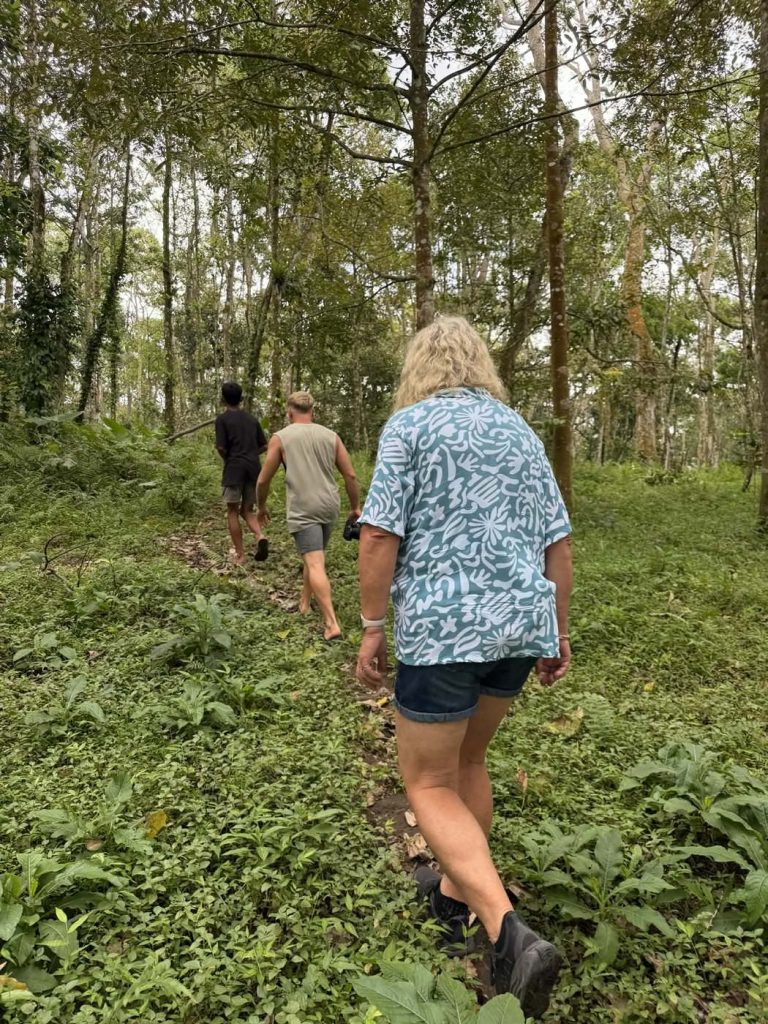
From the restaurant it’s a short walk through the village, back streets and bamboo forest (this is where a guide earns their fee) to the sign marking the start of the Tetebatu Monkey Forest Gate.
If you don’t have a guide, walk to the Monkey Forest Gate and pay 30,000 IDR per person before you go in. You’ll find someone at the small ticket stand by the entry sign. The fee goes towards keeping the forest free of plastic and stopping farmland creeping into the langurs’ territory.
The terrain is level and there are plenty of different tracks through the forest. We’d been walking for about 10 minutes when word came that another group had spotted the monkeys (great news for us!). We then spent 15-20 minutes watching them jump through the canopy.
After the recent rain the forest was damp and the trail was muddy, slippery in places but nothing too extreme. Wear closed shoes.
Beware: Keep your distance and don’t stand directly underneath them, or you might get treated to an unwanted shower!

The Elusive Ebony Leaf Monkeys
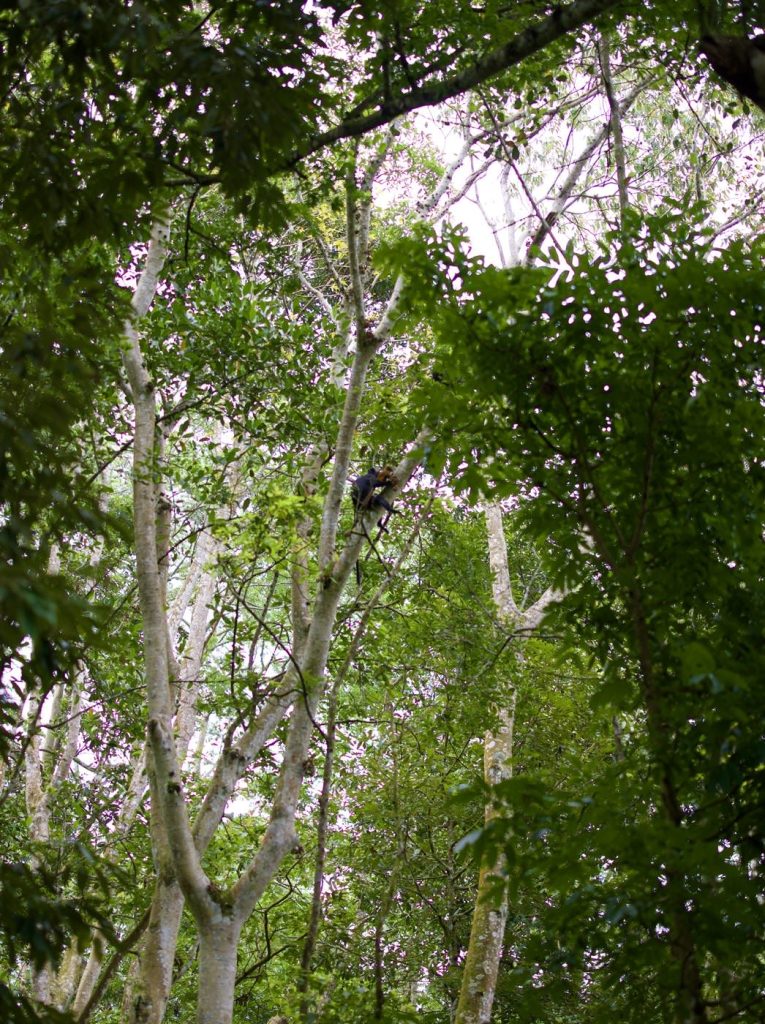
In our experience, the ebony leaf monkeys are the complete opposite of the inquisitive grey macaques. These guys are wild and incredibly shy. During our trek, we spotted a large troop of around 20 to 30 adults. The black monkeys make you earn the view, because they like to stay high up in the safety of the dense jungle canopy. They’re most active during the day, swinging through the upper branches to forage for fresh leaves, flowers and wild fruit.
If you’re lucky like us, you might spot something that looks completely out of place against the adults’ black fur: their babies. The infants are born bright orange (a lot like the dusky leaf monkey in Thailand), so they look like little neon flares moving through the trees. You’ll probably spot the babies before the adults because of the colour!
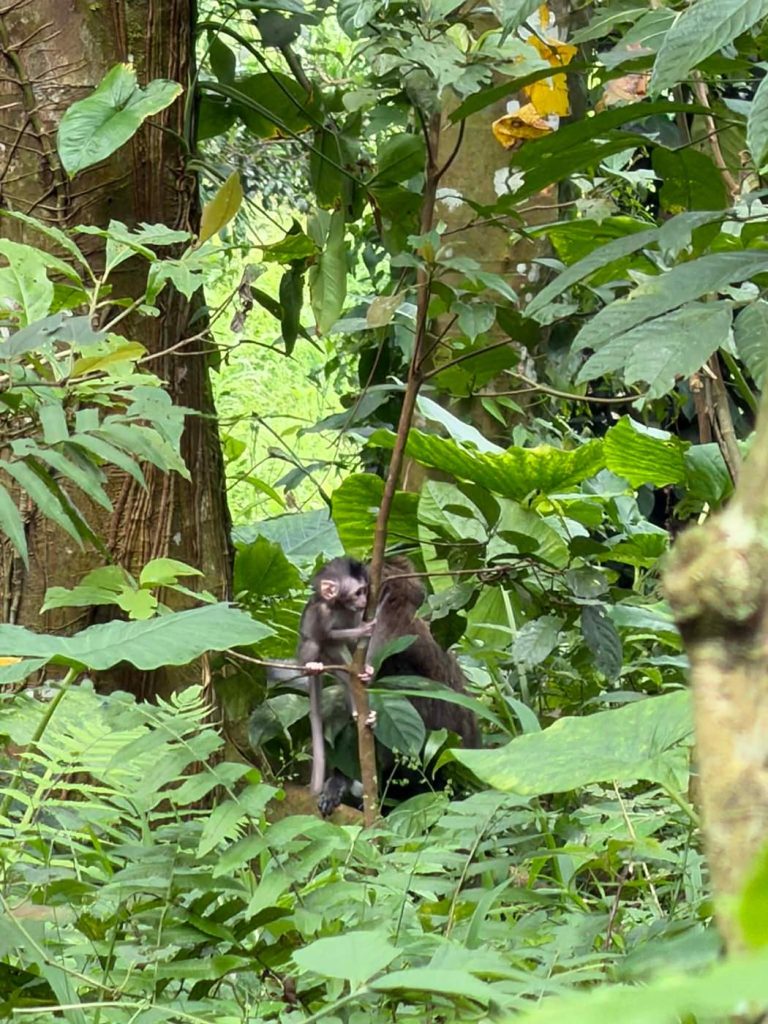
We also spotted some macaques in the forest. The two species really don’t get along, and we saw it first-hand when the ebony leaf monkeys chased the macaques and the jungle erupted with screams and screeches. The macaques retreated to the forest floor pretty quickly.
Tip: Bring binoculars as these monkeys rarely come down low.


Local Tip: Don’t bring food. While the Black monkeys are shy, the grey macaques also found here are opportunists. Keep your bags zipped up.

Continuing on to the Tetebatu Waterfall & Rice Fields
Once you’ve had your fill of the monkeys, we’d keep going with your guide to the Tetebatu waterfall. It’s about 20 minutes away on the roads and trails.
Bring swimwear, because you can swim at the waterfall. It’s a great place to cool off after the monkeys, and there are plenty of fruits and medicinal plants along the way that the guides love explaining. We planned our visit for the wet season in February, and the whole area was bursting with colour and the waterfall was flowing well.
Read: Where to stay in Tetebatu


Tetebatu Monkey Forest FAQs
What are the black monkeys in Lombok?
They’re ebony leaf monkeys, also known as East Javan langurs or Javan lutung (Trachypithecus auratus). Adults are glossy black and the babies are born bright orange. The Tetebatu Monkey Forest, at the foot of Mount Rinjani, is where we go to see them.
Will I definitely see the monkeys?
No. They’re wild, nobody feeds them, and they spend most of the day high in the canopy. Your best shot is the morning, between 8 and 11am, with a local guide. We found a troop of 20 to 30 about 10 minutes in, after another group had spotted them.
Can I visit Tetebatu Monkey Forest without a guide?
Yes. Walk to the Monkey Forest Gate and pay 30,000 IDR per person at the ticket stand by the entry sign. The trails aren’t marked and the monkeys don’t hang around the entrance, so we’d still take a guide.
How much does a guided walk cost?
Guided walks run 150,000 to 250,000 IDR per person, including the 30,000 IDR forest entry, the waterfall and the rice fields. Those were the prices when we visited in February 2026.
Is there more than one monkey forest in Lombok?
Two places get called that. Tetebatu’s forest has the shy black ebony leaf monkeys. The other is the Pusuk Pass, on the road between Mataram and the north coast, where grey macaques wait by the roadside and go straight for your snacks.
More Lombok Travel Guides
If you’re planning the rest of the island around the monkeys, our 7-day Lombok itinerary puts Tetebatu on day three, with the rice terraces and the monkey forest in one ride up from Kuta.
Looking for more things to do in Lombok? Check out our guides, or join us from Senggigi every Thursday or Kuta every Friday on the Lombok Loop, our 4-day motorbike trip around the island we call home!

