How to Visit Tiu Kelep & Sendang Gile Waterfalls

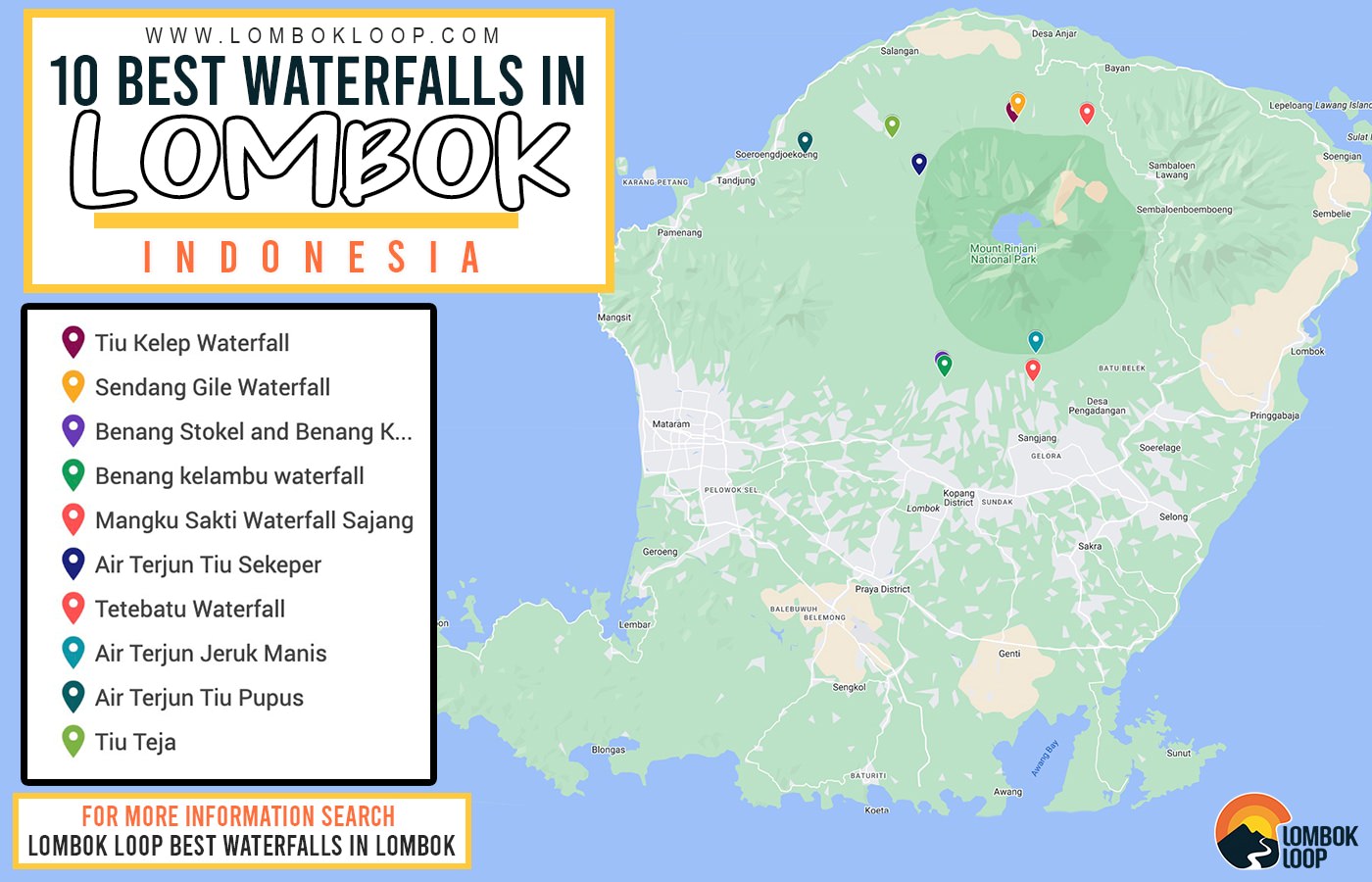
Lombok is famous for its wild, untamed nature, and while most travelers head straight for the resorts in Senggigi or the surf breaks in Kuta, they often miss the island’s most powerful waterfalls in Lombok.
Tucked away in the northern highlands of Senaru near the all mighty Mount Rinjani you’ll find the twin falls of Tiu Kelep and Sendang Gile. We’ve been visiting this waterfall for many years, and as it’s a highlight on our famous Lombok Loop, we visit the falls every single week!
Visiting these two giants is consistently rated as one of the top things to do in Lombok, and here’s our local guide on the best way to visit, sharing our hidden spots, cool swimming places, and how we like to explore the falls– local style!
Overview & Latest Information
The Senaru waterfalls are located within the Rinjani National Park boundaries. This village is also the traditional starting point for the Mount Rinjani Trek, making these waterfalls the perfect warm-up before a climb or a recovery soak after descending the volcano.
You don’t just visit one as they are part of a single trail system where you walk down to the easily accessible Sendang Gile first before venturing deeper into the jungle for Tiu Kelep all up roughly 6 km return hike.
On our most recent trip in January 2026 the trail to Sendang Gile was clean and well maintained and it seems as though the trail to Tiu Kelep has improved since another visit as the track is clearly visible and rocks have been bundled with mesh for a more stable route.
Quick Things We’ve Learned About This Waterfall:
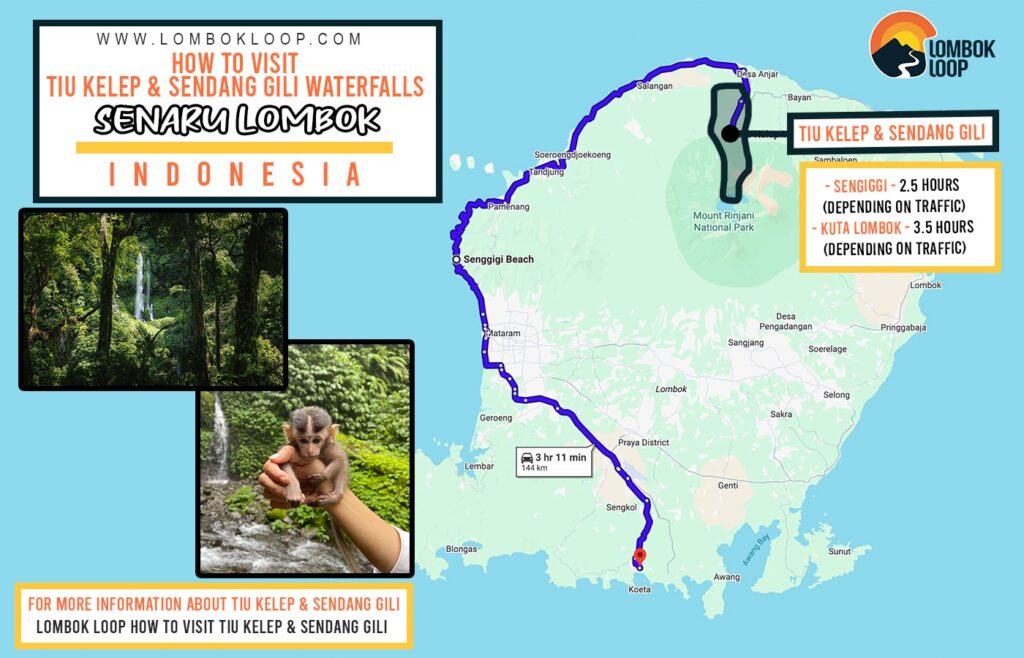
- Location: Senaru Village, North Lombok (Approx. 2.5 hours from Senggigi and 3.5 from Kuta) this could be longer depending if you’re taking a car or motorbike.
- Cost: Entry is 20,000 IDR (covers both waterfalls)
- Parking: 10,000 IDR (for the day)
- Total Time: Allow at least 2 to 3 hours to see both comfortably without rushing.
- The Hike: 6 km return. It’s a mix of paved stairs (to Sendang Gile) and a jungle trail with river crossings (to Tiu Kelep).
- Water Power: The flow of the waterfalls changes drastically between the dry and wet seasons. Check our guide on the best time to visit Lombok to plan accordingly.
- Best Time to Visit: Best visited in the morning (before 11:00 AM) to beat the day-trip crowds coming from the south also we found that the weekend had many more people compared our weekday visit.
- Local Guide Cost: You’ll need to pay a guide to take you to the waterfalls 150,000 IDR (per group).This is a community run system and your contribution helps.
Tip: Be mindful when visiting if there has been recent rain. We’ve seen this place flood in the wet season and trust us, it can happen quickly! It is best to speak with your tour guide first before descending to the falls.
How to Get to the Famous Senaru Waterfalls
In our experience, getting to Senaru is a bit of a mission if you find yourself starting in the south of Lombok however we feel it is 100% worth the effort and you can always book a night in Senaru to break up the travel.
If you want to skip the navigation headache and the “guide negotiation” at the gate, we hit these waterfalls on the Lombok Loop our 4-day adventure every single week. We take care of the logistics so you can just enjoy the hike (plus see some other amazing sites in Lombok from our local perspective).
If you aren’t joining us on the Loop, you have two main options:
- Private Driver: You can arrange a car for the day, which is the most comfortable way to handle the winding mountain roads.
- Guided Tours: We like supporting other local tourism businesses. If you want a reliable external option outside the Lombok Loop, check out some of our competitors listings on GetYourGuide, which often include hotel pick-up from Senggigi or Kuta.
Riding to Senaru Yourself
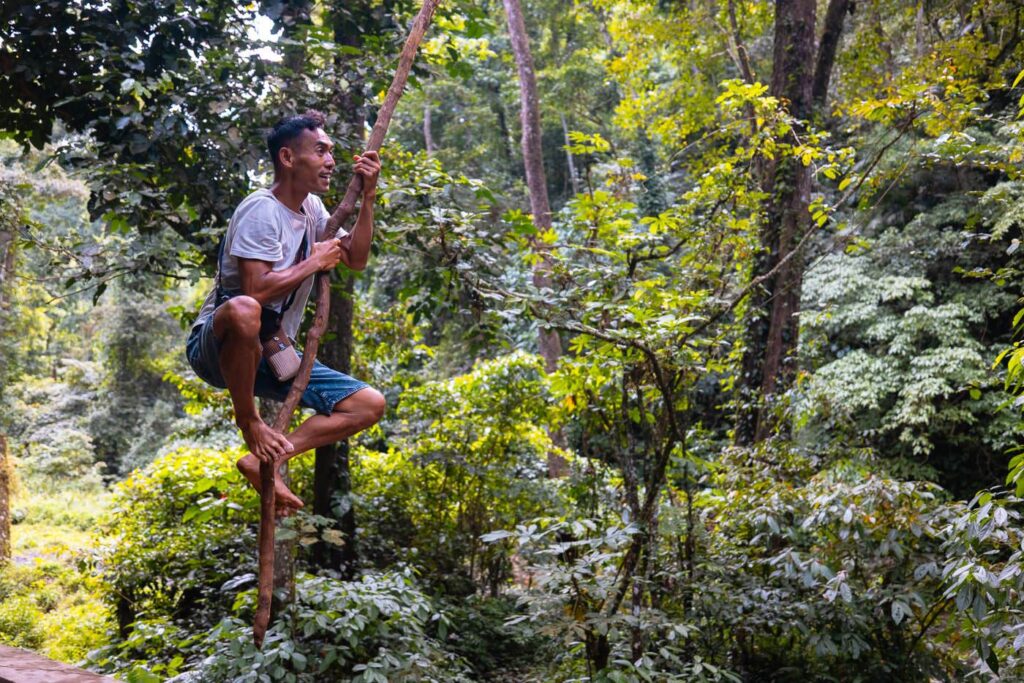
Another alternative option is riding to Senaru yourself, though we suggest this only if you’re a confident rider. The roads are well-paved, but they are steep and have plenty of hairpin turns that require focus. Our riders are pros and have handled this road many times, it may be sketchy on your first go, especially on the steep road leading up to Senaru (JL. Pariwisata).
- Cost: Expect to pay around 100K IDR per day for a decent 150cc scooter.
- The Route: If you’re coming from the south take the Pusuk Monkey Forest road. It’s well maintained, and incredibly scenic.
- Fuel: Fill up your tank in Mataram or Senggigi. While there are small roadside stalls selling fuel in the north, they are less reliable and a bit more expensive. We like to use the “Perta” fuel stations.
- Travel Time: The ride from Senggigi takes about 2 to 2.5 hours. From Kuta, it’s a much longer depending on traffic and how many times you stop for photos, it can take around 3.5 hours.
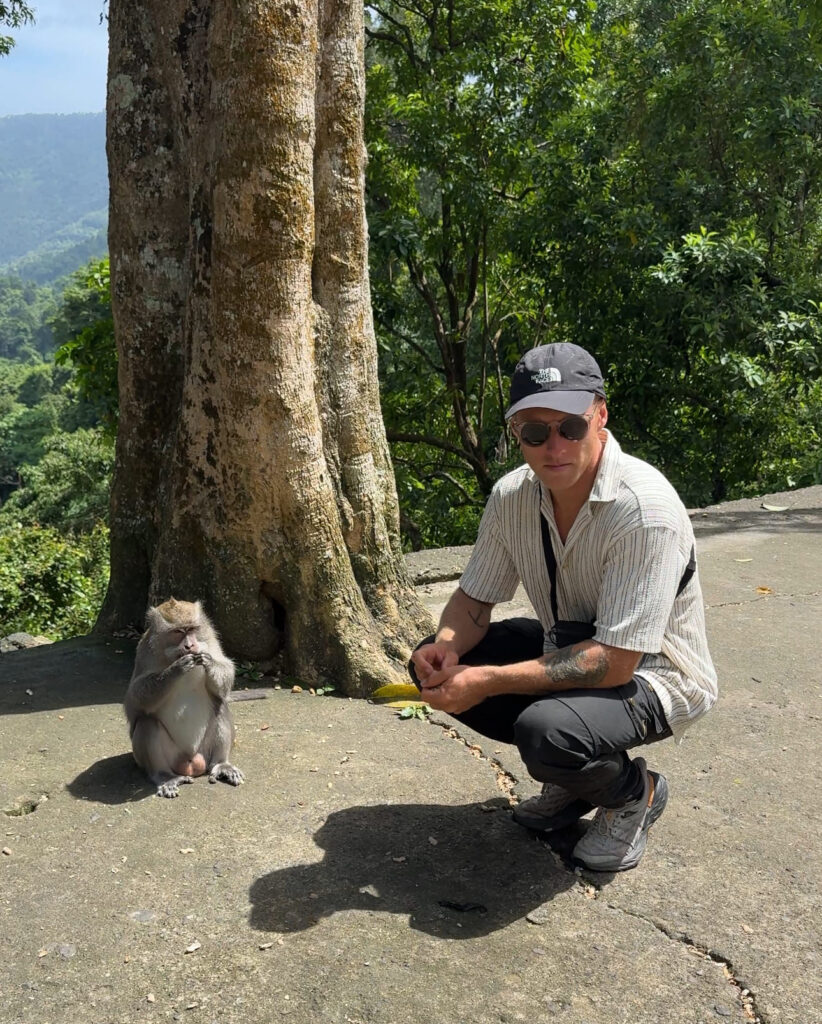
Tip: If you stop at the Monkey Forest beware these monkeys aren’t shy, and they will try to grab food right off your bike so don’t say we didn’t tell you so!
The Guide Situation for Exploring the Waterfalls
There is now a mandatory guide fee of 150,000 IDR (per group) when visiting the Senaru waterfalls. From the moment you arrive at the gate, you’ll be told that a guide is required to reach both Sendang Gile and Tiu Kelep.
If we’re being 100% transparent, a guide is not strictly necessary for navigation to the falls as the trail is well-trodden and fairly obvious, especially with the recent path improvements. However, we choose to support the guide system and we encourage our guests to do the same.
We’ve personally seen Lombok’s tourism industry hit incredibly hard by the 2018 earthquakes and the subsequent pandemic, and Senaru felt this impact more than almost anywhere else. These guides are all local villagers whose livelihoods depend on these falls. Aside from supporting the local economy, there are several actual bonuses to having them along
- Local Knowledge: They know every rock, river crossing, and shortcut. They have stories about the flora, the history of the Rinjani National Park, and the Sasak culture.
- Photos: You essentially get a personal photographer as they’re more than happy to snap shots of you during your hike.
- Safety: While the path is clear, having someone who knows the river current after a heavy rain is an added layer of security.
It’s a small price to pay to directly support the local community and ensure the trails remain maintained for years to come.
Arriving at the Tiu Kelep Gate
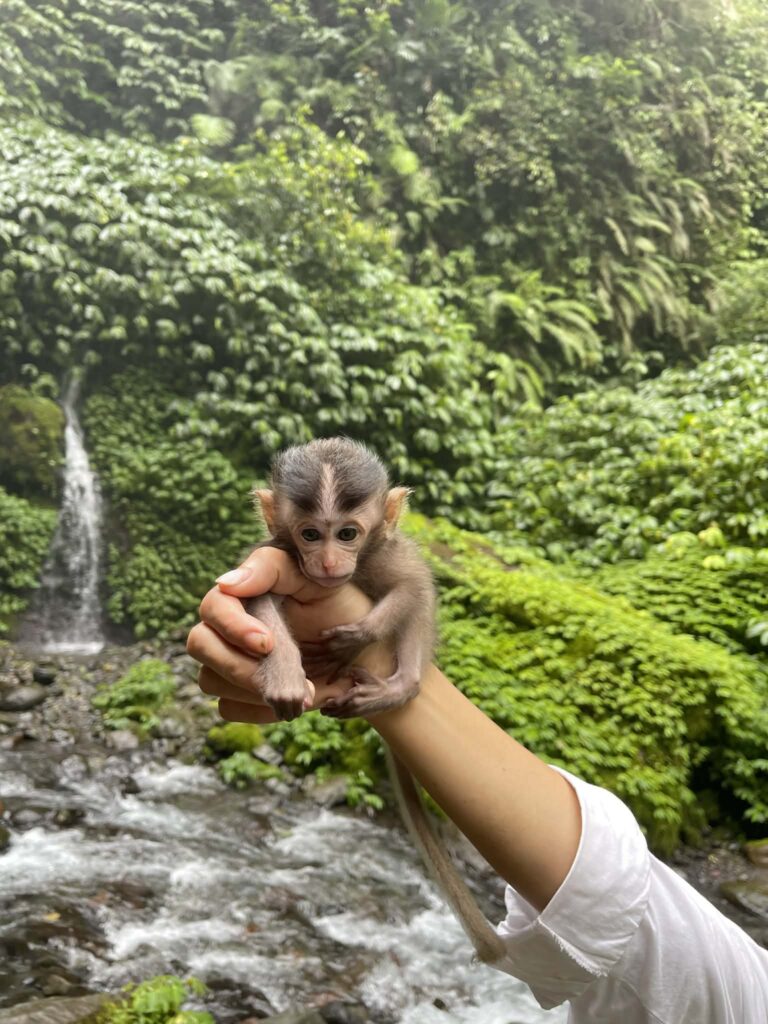
Once your guide is appointed, there are just a few logistical steps at the entrance before the real fun begins. You’ll pay a 10,000 IDR parking fee for your scooter and then head toward the large gates that mark the official start of the Rinjani National Park trail.
The official Tiu kelep entrance fee is now 20,000 IDR per person. On our most recent visit we were genuinely impressed by how well-maintained the entrance area was. The park keepers are doing a fantastic job of keeping the trails clear of plastic which is a refreshing change from some other paid attractions in Indonesia.
If you’re feeling hungry or need a pre-hike caffeine hit, we highly recommend Cafe Rifka. It’s located right near the gates and is our go-to spot for a quick snack before the hike. This is also your last chance for a toilet break before you head into the jungle, so definitely make use of the facilities here.
Tip: Take your time down the stairs as you might spot some animals like the local monkeys or like us some huge butterflies.
The Trek to Sendang Gile Waterfall
As soon as you start walking down the stairs you’ll feel the change in air temperature. The surrounding nature starts to thicken and you find yourself walking through some of the most beautiful rainforest in the world. The best part about getting to this specific waterfall is It’s just a short 10-15 minute descent making it easily accessible for those who may not be physically fit to hike for hours.
Once you reach the bottom of the stairs you’ll come to a T intersection. You’re going to head down to the left in the direction of Sendang Gile for this part. You’ll find some small vendors selling fresh corn which they’re cooking on a small fire and some refreshing drinks.
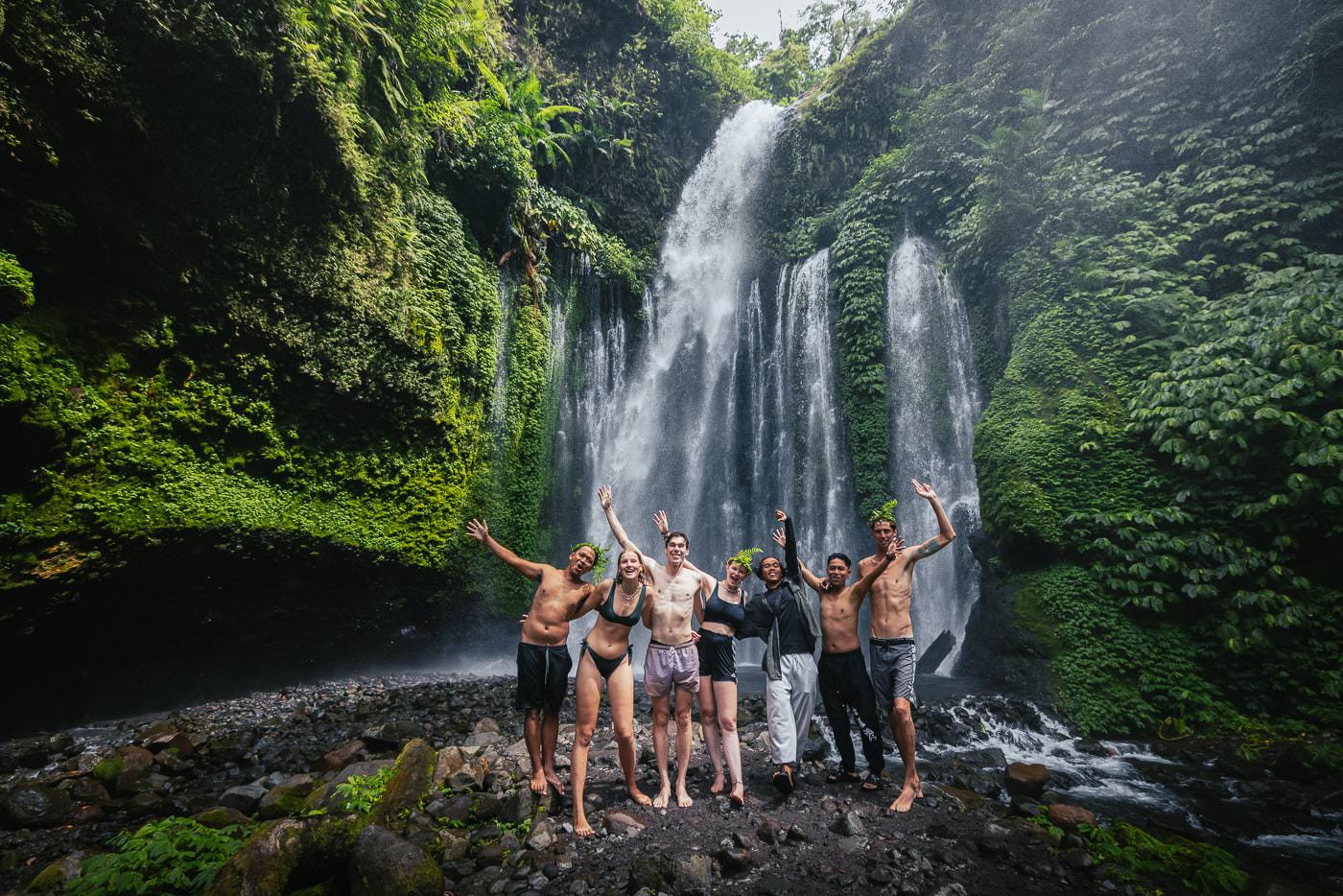
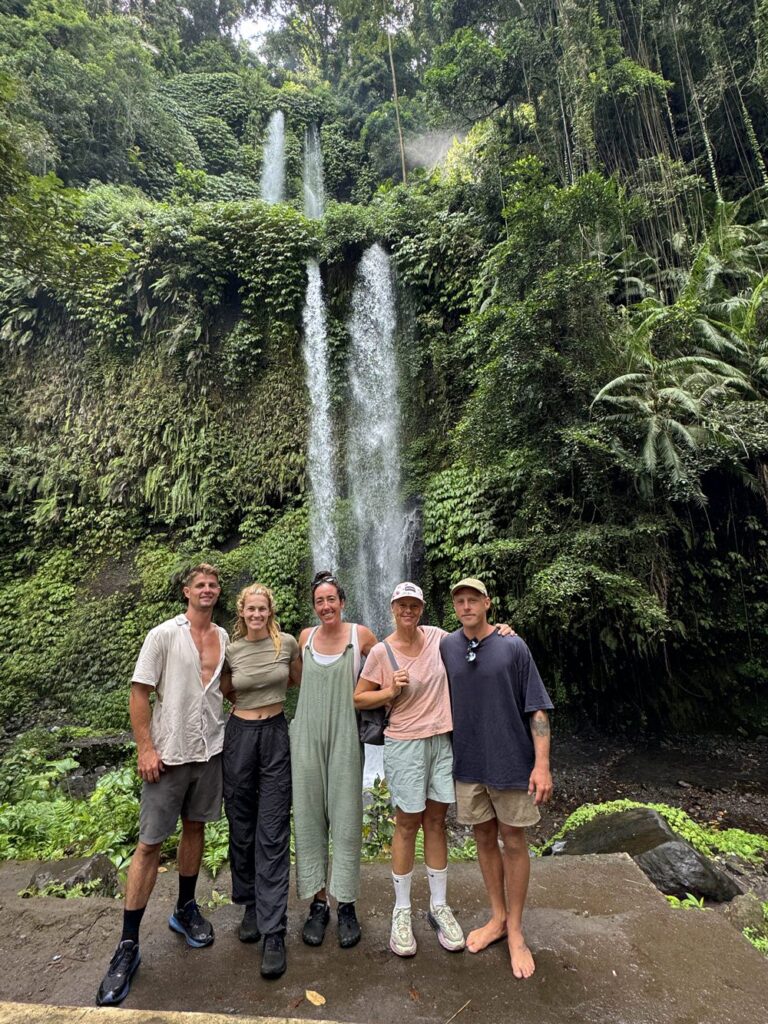
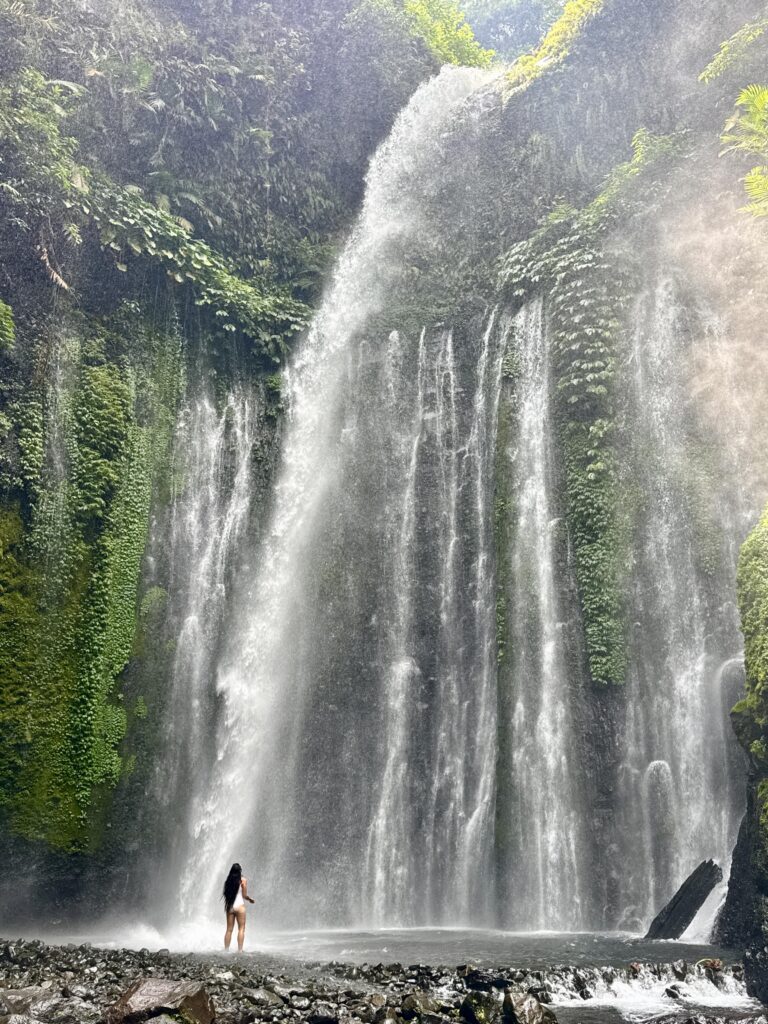
The green foliage behind Sendang Gile waterfall makes it very unique. The mist and lighting makes it feel like you’re on set of Jurassic Park minus the dinosaurs of course! This raw, prehistoric vibe is exactly what people talk about when comparing Lombok vs Bali as it just feels wilder here.
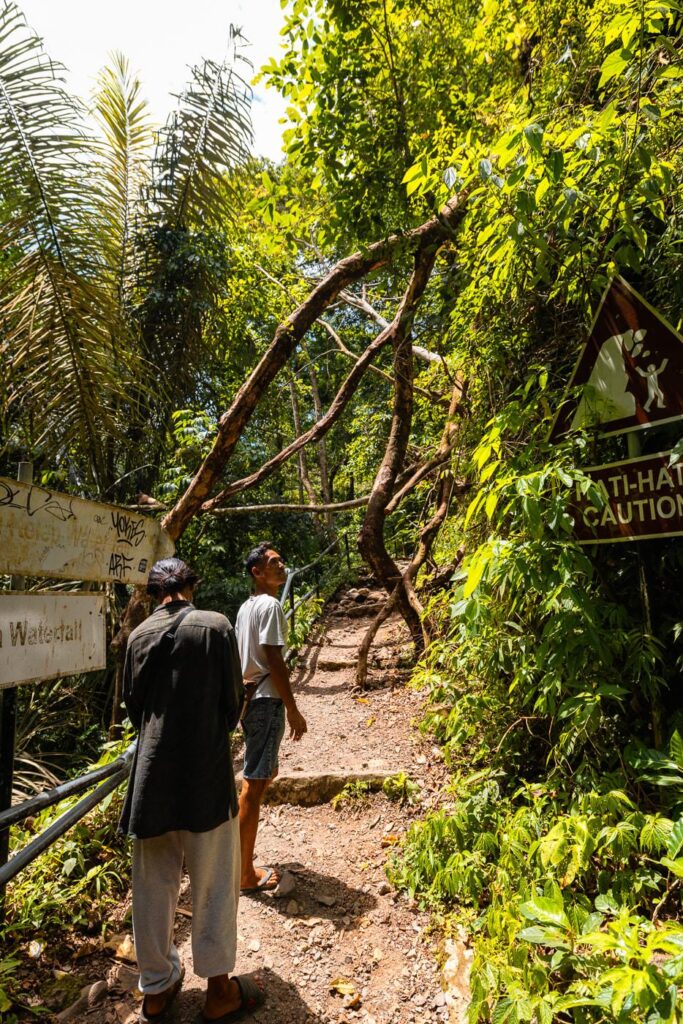
There is a large rock which you can stand on for photos just in front of the waterfall and the further back your photographer stands the better your photos will be as you can get the top tier in the photo! If you’re feeling up to it then you can also stand underneath as this waterfall is not as powerful as Tiu Kelep. This waterfall is just the beginning so once you’ve taken everything in its time to move onto Tiu Kelep.
Tip: Please help us keep this place pristine. Take your rubbish back up with you and use the bins at the top entry gate. This prevents waste from reaching the falls or being picked up by the local monkeys! We noticed more vendors popping up recently at Sendang Gile, and many of them take rubbish.
Hiking to Tiu Kelep Waterfall
After Sendang Gile, it’s time for the main event. You’ll walk back up the stairs to the T-section and this time, head left. There are multiple signs around, and since you’ll have your guide with you, it is very hard to get lost.
The next 30 to 45 minutes of hiking is where the real adventure begins. You’ll find yourself walking along a narrow trail with a water channel running right at your side (this is the water that eventually heads into the tunnel).
The Bridge & The Tubing Experience
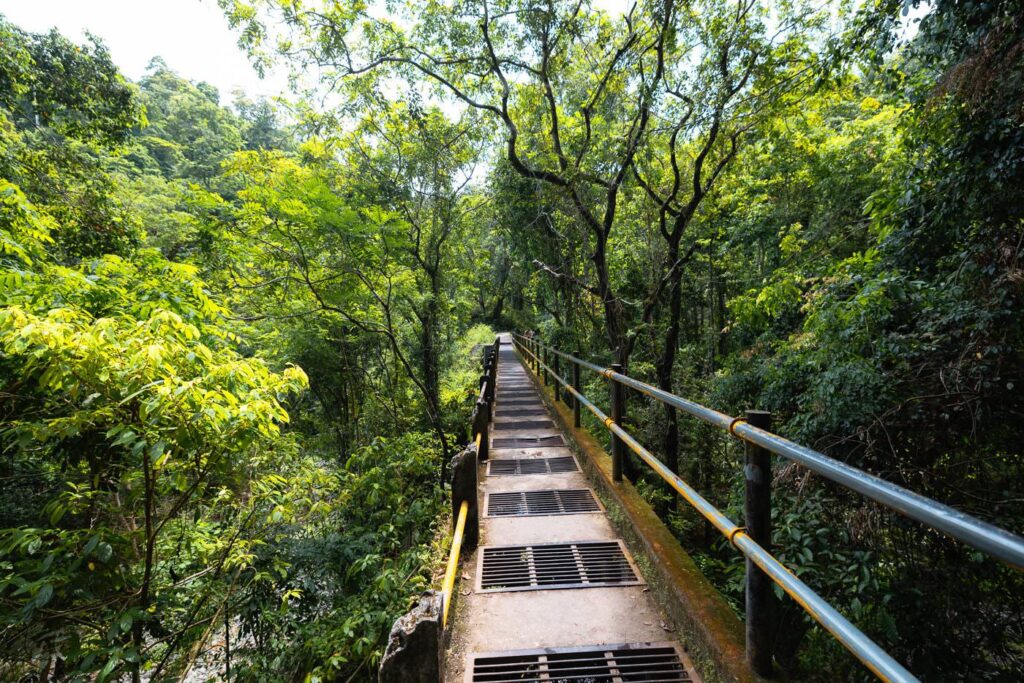
As you continue, you’ll come to a steep set of concrete stairs. Take your time here as they are a little uneven, but nothing too concerning. You’ll then walk along a bridge where you can look down and see the water rushing beneath you.
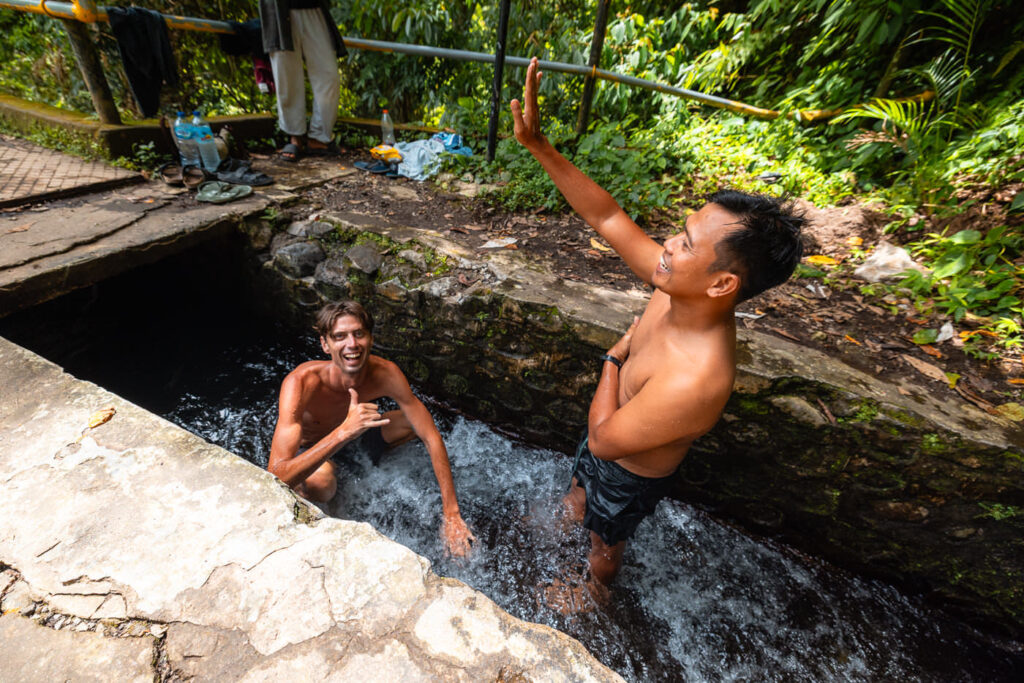
They have recently set up a local tubing experience here where you can pay 100,000 IDR to tube through the bridge section. They now provide a tube, helmet, and elbow pads.
We actually tried this on our very first visit years ago when it was just a “do-it-yourself” slide! We didn’t have to pay back then, but now with the supplied equipment, it is much safer, easier to float down, and a great way to support the local guys running it. It’s a fun stop along the hike if you want an extra adrenaline hit.
The River Crossing
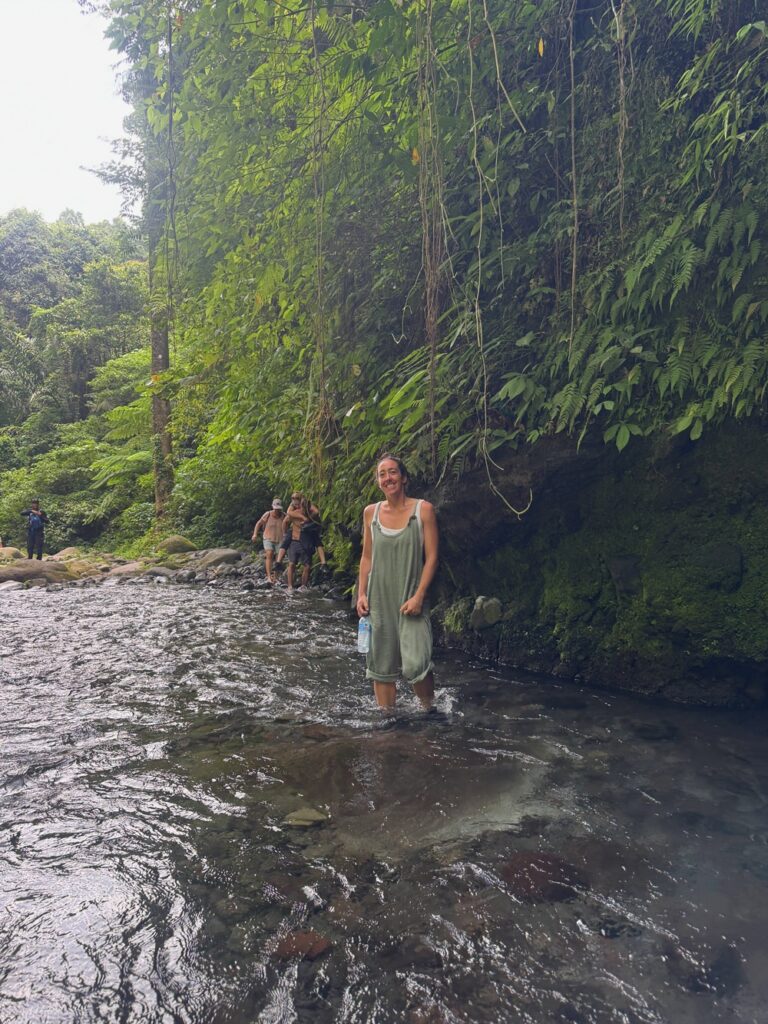
Continuing past the bridge, the track winds around the edge of the valley until you reach the rocks. This means you’re about 15 minutes away. You will need to do some minor rock climbing (nothing serious) before you hit the river crossing.
This is the moment of truth. You either take off your shoes or get them wet. Depending on the season, the water can range from ankle-deep to mid-calf.
We have seen so many travelers try to balance on slippery rocks just to keep their shoes dry, only to inevitably slip and fall in anyway! Don’t be those people. Embrace the cold mountain water; it’s part of the experience.
Arriving at the All-Mighty Tiu Kelep
From the river crossing, it’s only about 5 more minutes of walking before you hear the unmistakable roar of Tiu Kelep.
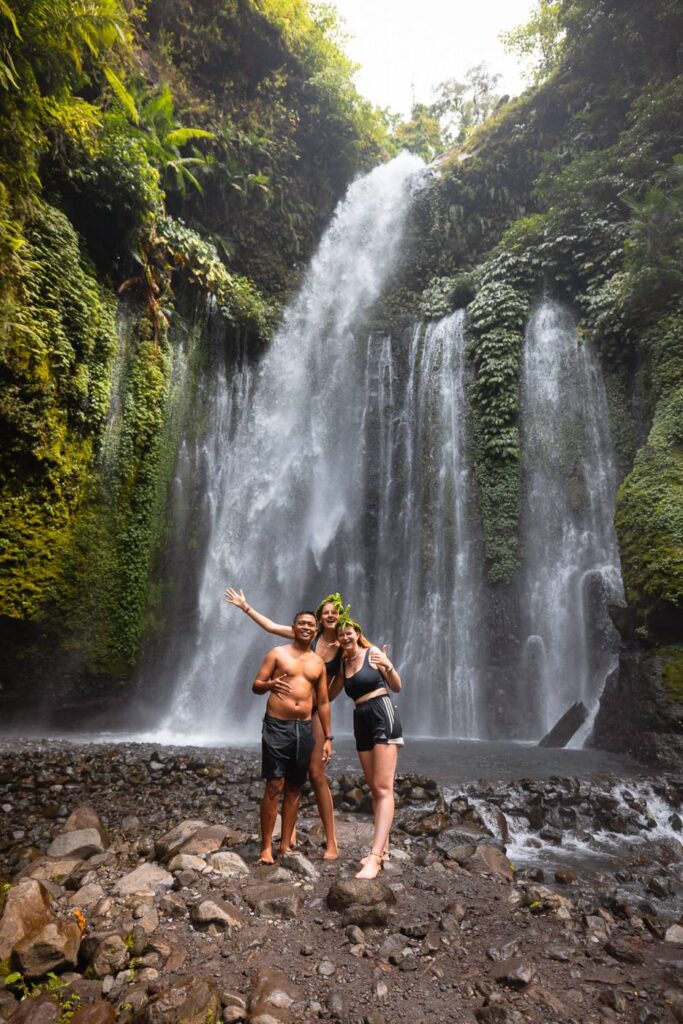
The pool at the bottom has changed significantly since the 2018 earthquake it is much shallower now. We strongly advise against standing directly under the main waterfall. It is extremely powerful and the force alone can cause injury.
Instead, head toward the back rock wall where smaller, gentler waterfalls cascade down as this is a safe spot to stand. There are also some nice rock pools to the side of the main falls which are the perfect place to lay back and relax.
Returning visitors might notice the area looks different. There used to be a large tree and many more huge boulders at the base, but these seem to have been moved downstream by higher floods, making the waterfall area feel much clearer and more open than when we first started coming to Tiu Kelep.
Enjoy some time here before returning down the same trail back to the main gate.
How To Escape The Crowds
If you’re planning to visit on a weekend, our biggest piece of advice is simple: arrive early. On our last trip, we visited on a Saturday and the difference in foot traffic was obvious. We arrived at the gate before 9:30 AM, and we had the trails mostly to ourselves. By the time we were walking back from Tiu Kelep around 11:00 AM, the waves of day-trippers were just starting to flood in.
The truth is we’ve seen this place get genuinely crowded between 11:00 AM and 2:00 PM. But here’s the secret we tell our guests – most visitors are intimidated by the power of the water and tend to cluster within ten feet of where the trail ends If you are comfortable getting a little wet you can usually find a spot with absolutely no one around at the side of the falls. We like to say the crowd stays dry and the adventurers get the views!
Alternatively If you really want to maximize your chances of having the waterfall to yourself, try flipping the itinerary. Head straight to Tiu Kelep first. Most tourists and tour groups follow the standard path stopping at Sendang Gile first for photos. By hiking straight to Tiu Kelep, you beat the crowds. You can then hit Sendang Gile on your way back and it’s just as beautiful in the afternoon.
Hiking Back up: Where to Eat & Relax
After completing the hike back up the stairs, you are going to be hungry (and likely sweaty). While there are plenty of simple warungs nearby, our post-hike ritual is always the same and that’s to head straight to Rinjani Lodge.
This place offers incredible views over the valley and rice fields you just explored, but the real draw is the infinity pool. It is hands down the best place to cool off and recover. Even if you aren’t a guest, you can usually visit for a meal and a swim.
Trip Idea: If you’ve traveled all the way from Kuta (3+ hours), we highly recommend booking a night here. Waking up to these views beats driving back in the dark any day.

Don’t Miss the Secret Viewpoint
Before you pull out of Senaru and head back down the mountain, there is one last spot we always tell our guests to visit: the “Kebun Kopi dan Cokelat” (Coffee and Cocoa Garden).
In our experience, this is the best 180 degree perspective of the valley you just spent all morning hiking through. When we visited recently, the coffee stall was actually empty but that didn’t matter. You come here for the view, which more than makes up for the lack of caffeine.
Good to know: The track up here is steep. If the road is even slightly wet, the surface becomes incredibly slippery and can be a nightmare on a scooter. If you aren’t 100% confident in your bike skills, play it safe and park your bike at the Senaru Traditional Village and walk the rest of the way. It’s a 15-minute uphill stroll through the surrounding cocoa and coffee plantations, making the walk itself a highlight.
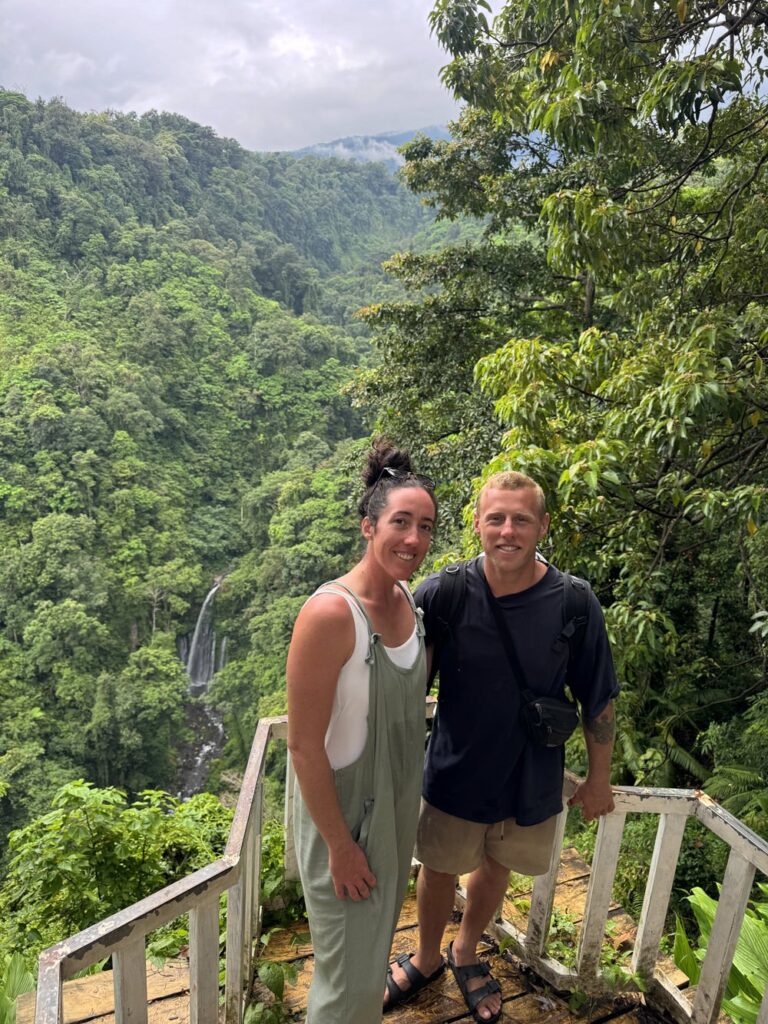
The journey to Senaru might be long, but standing beneath the thundering spray of Tiu Kelep is a raw, unforgettable reminder of why you came to Lombok.
Whether you tackle the adventure solo or join us on the Lombok Loop, make sure you don’t leave the island without seeing the giants of the North.